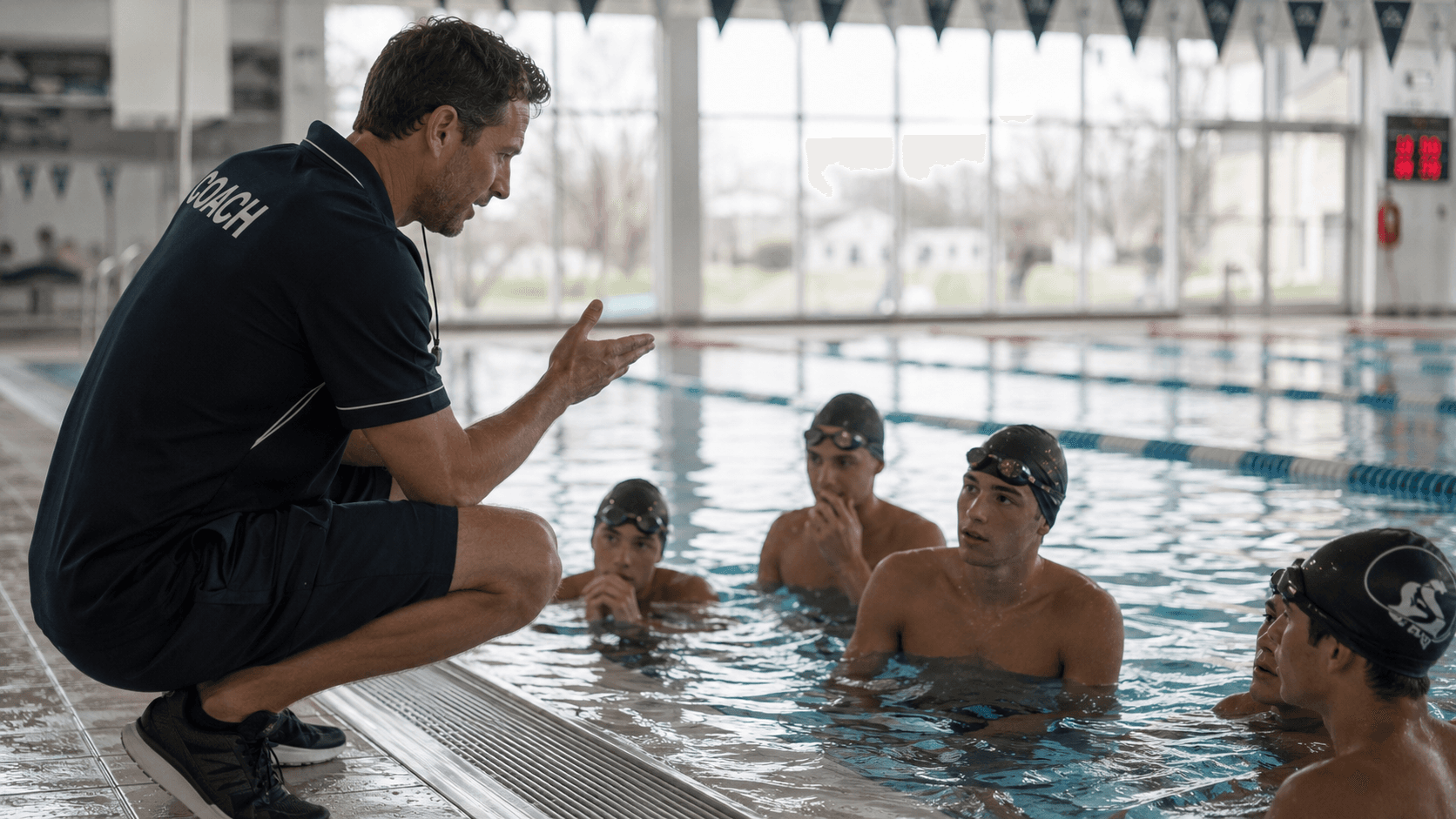
By Tommy Engelstad Pedersen, swim coach
A good training week is rarely about individual sessions in isolation. It's about creating a clear thread through the week — in the technical work, the load, the details, and the follow-up of each swimmer.
SwimForge hasn't changed how I think as a coach. But it has made my workflow faster and more organised.
Start with the week — not the session
I almost always start with the week as a whole before I think about details.
What does the group need right now? Are we in a period of high load? Are we building capacity, working on speed, technique, or race pace? Is there a meet coming up?
When the main goal for the week is clear, planning good sessions becomes much easier. A typical week might include:
- one clear quality session
- one session with higher total load
- one lighter technical session
- one session focused on speed or race pace
That way, both my swimmers and I know what we're actually trying to achieve from day to day.
I also try to be clear with the group about the week's focus. Sometimes it's very simple:
- streamline
- the turn zone
- competition preparation
Small things — but they give sessions more direction and better quality.
In SwimForge I add this directly alongside the weekly plan as an overarching "focus for the week", so swimmers can see what we're working on throughout the week.
From idea to finished session
Once I know what the week should contain, I use SwimForge to build the actual sessions.
I start simple. I open the day or session and give the AI a quick input:
"Race pace + turns. Around 5,000 metres. Focus on controlled opening and technique under fatigue."
The AI gives me a suggestion and I have a starting point straight away — instead of staring at a blank page or digging through old Word documents.
That doesn't mean the AI produces everything ready-made. I still adjust a lot myself: moving sets around, changing send-off times, adding technical work, adapting level, load, and individualisation.
But it's much faster to work from something than to start from scratch every time.
Differentiation without the chaos
One thing I spend a lot of time on is differentiation. I prefer the group to train together — but not necessarily identically throughout. Some swimmers need more sprint work, others need more capacity or IM focus.
Previously, this would quickly get messy in the training plan. Now I split parts of the main set into subgroups directly in SwimForge. The sprint group and the distance group can do different main series, while the rest of the session is shared.
That makes sessions easier to read, easier to adjust, and easier to run from the pool deck.
After training
After the session I ask myself a few simple questions:
- What worked well?
- Did we hit the right intensity?
- Was the load right?
- Did everyone get a good challenge and sense of achievement?
- Is this a session I'd use again — fully or in part?
The important thing is to take away enough to make next week a little smarter than this one.
What actually saves time
What saves the most time isn't any single feature. It's the combination of:
- not having to start from a blank page
- being able to adjust sessions quickly
- keeping an overview of groups and differentiation
- having everything in one place
- pulling up previous sessions or sets that worked well
The goal for me is to spend less time on administration and more time on individualisation, follow-up, coaching, and big-picture planning.
SwimForge doesn't do the job for me. But it makes it easier to plan, adjust, and stay organised — especially when life is busy and things need to change quickly.
Describe the session you want — and we'll handle the rest. You get structure, times, and improvement suggestions automatically. Start here.